Now leasing: Give your crew a new tool for the toolbox.

Valve corrections that avoided a $1.5 million main replacement
Introduction
Motmot partnered with Spalding DeDecker to investigate low flow and pressure affecting water service and fire suppression at a Michigan public high school. Much of the campus water system dated to the 1960s, and above-ground investigations could not confirm internal pipe condition or restrictions. The team needed direct visibility to identify the cause and determine whether replacement was necessary.
Project Scope
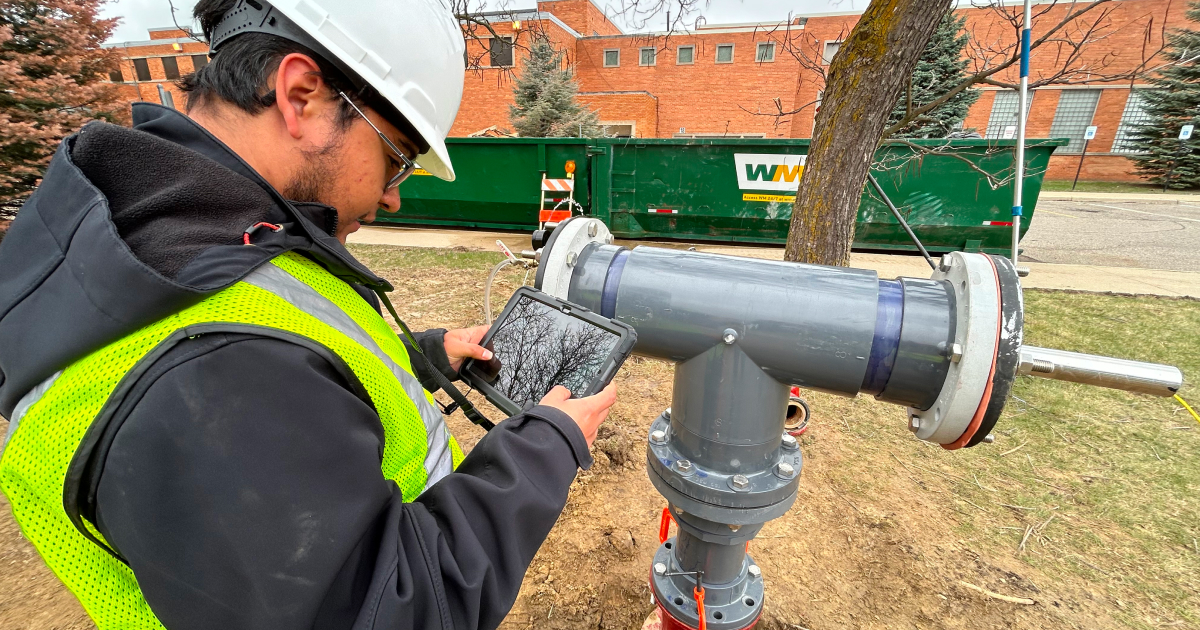
The investigation covered seven campus water main segments, with heavy tuberculation limiting access in some areas. Motmot's J-Series robot deployed through existing fire hydrants to document pipe conditions and observe system response. Several valves believed to be open were actually closed. Working with the field team, Motmot monitored flow inside the main as valves were adjusted, confirmed the operating positions and turn directions of three gate valves, and helped restore flow across four hydrants.
Data Collected
- Internal Video
- Still Imagery
- Acoustic Recordings
- Pressure Data
- Alignment References
Outcomes
- $1.5 million in replacement costs avoided. Inspection findings guided valve corrections that reduced capital costs by 75% with ~52X ROI for the client.
- Nearly three times the available flow. Combined available flow increased from 753 GPM to 2,153 GPM.
- Residual pressure restored. Residual pressure increased from 8 PSI to 48 PSI, improving conditions for the campus fire suppression system.
- Valve operations documented. Confirmed open-left versus open-right operation gave the team a reliable reference for future maintenance and emergency shutoffs.
- Clearer system mapping. Inspection data revealed discrepancies with existing drawings and supported an updated probable main alignment, subject to verification against utility records and field data.
- A baseline for future maintenance. Delivered a condition assessment report, inspection media, defect catalog and risk scores to support ongoing maintenance planning.